- Home
- Experiences
- Coffee Ceremony
A Living Tradition
The Coffee Ceremony
More than a drink — a ritual of welcome, connection and blessing, brewed slowly and shared together.
Eritrean & Ethiopian Heritage
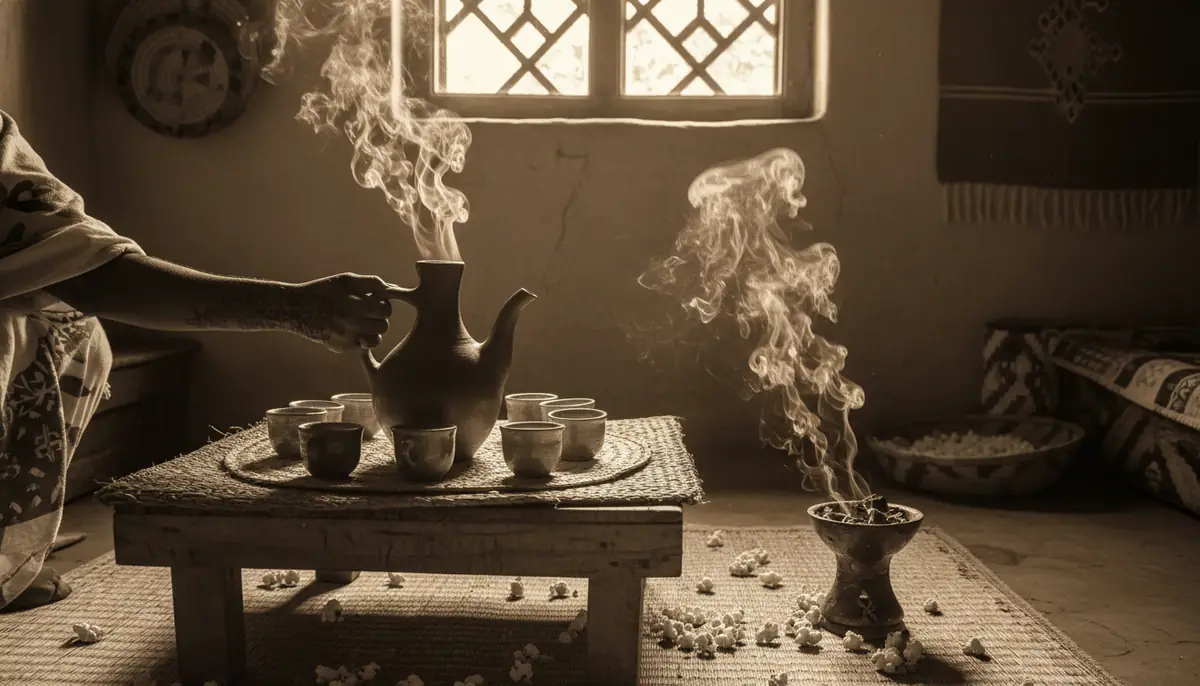
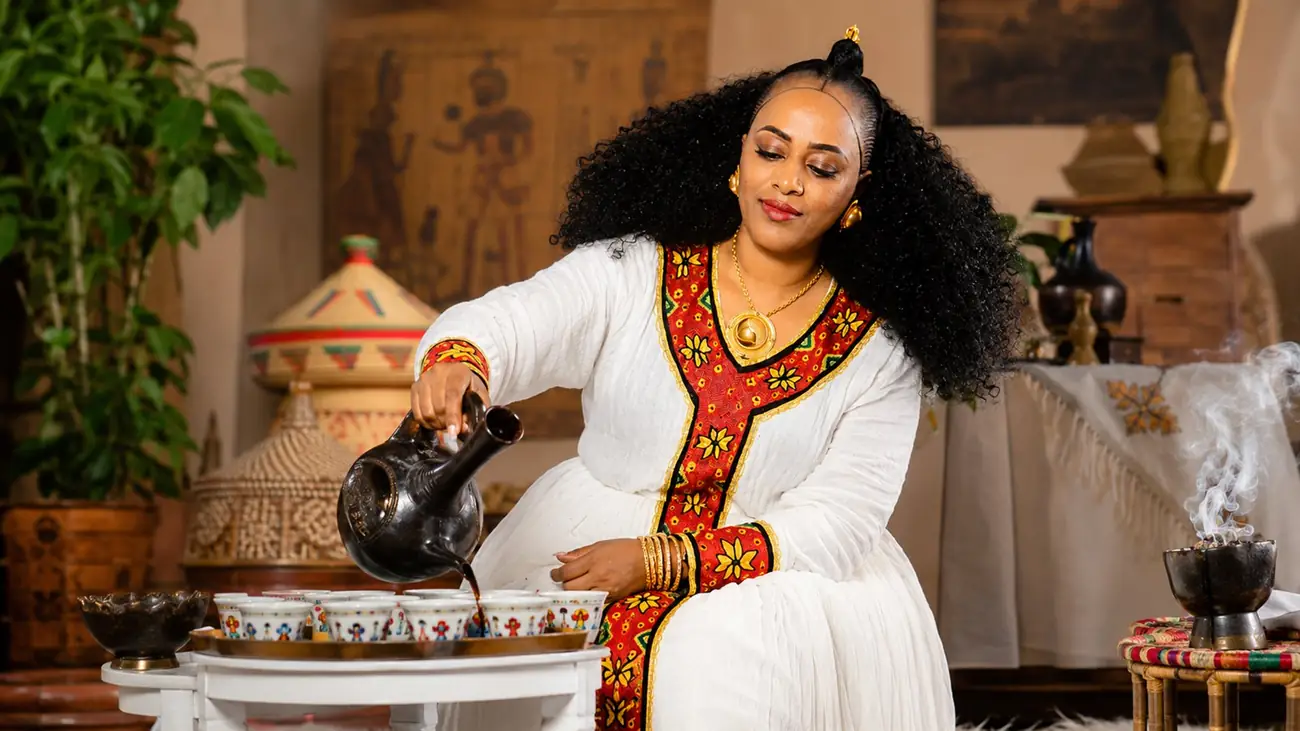
In Eritrea and Ethiopia, coffee — buna — is never rushed. Frankincense smoulders nearby, popcorn or roasted barley (kolo) is shared, and time slows down.
How It Unfolds
Green beans are roasted by hand over charcoal until dark and glistening, filling the room with their aroma. Watch the beans roast and breathe it in.
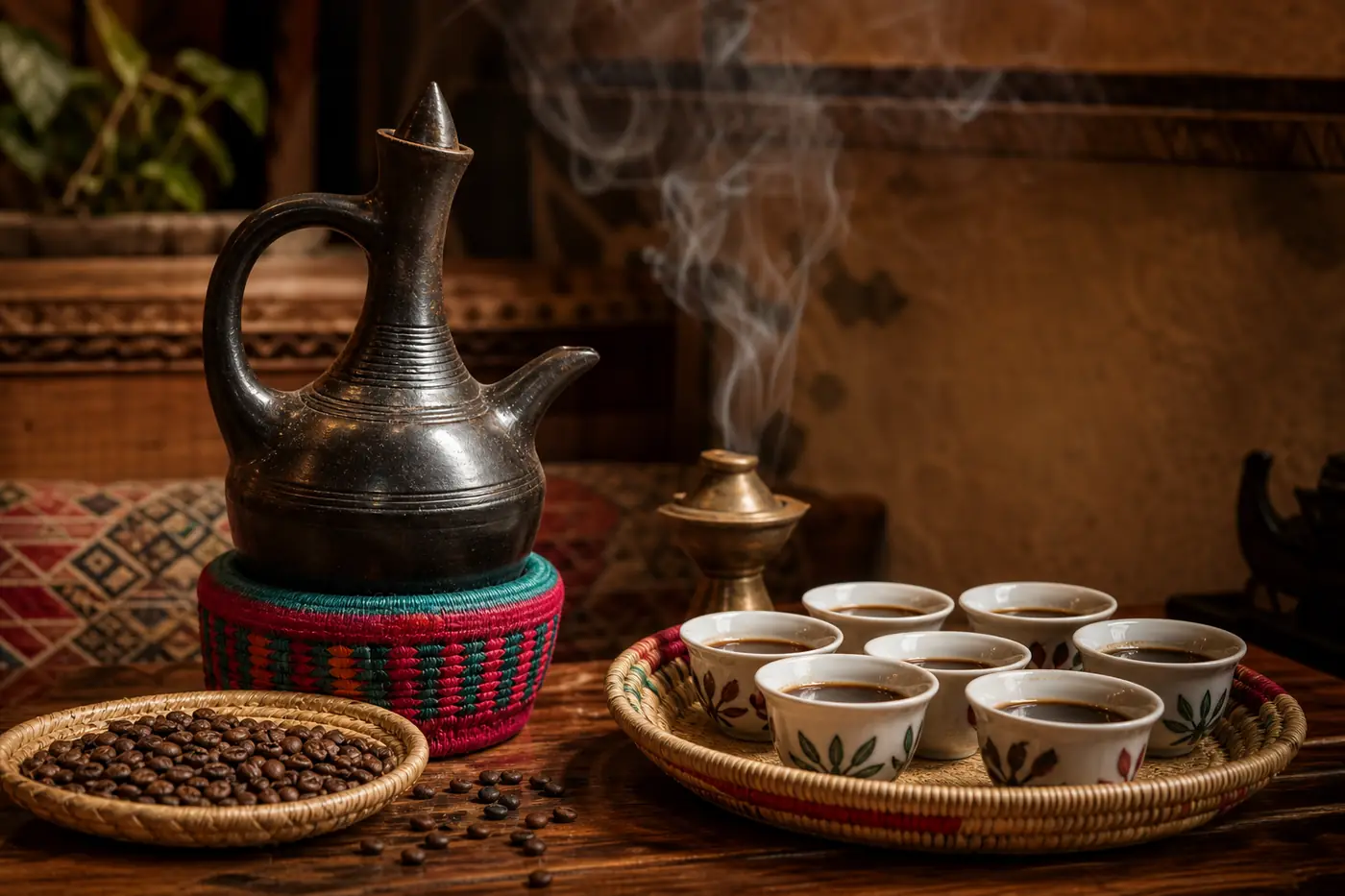
The beans are ground, then brewed slowly in a clay pot called a jebena — the traditional way.
The coffee is poured from a height into small handleless cups, and shared with popcorn or kolo.
Abol · Tona · Baraka
Tradition pours three cups, each with its own name and meaning.
The first and strongest cup — bold, full and awakening.
The second pour — smoother, for unhurried conversation.
The third cup — meaning blessing. To stay for it is to receive one.
Buna
Hand-roasted at your table, brewed in a jebena and poured the traditional way — a moment to slow down together.
Reserve Your CeremonyAt Your Table
Best enjoyed with 2 or more, the ceremony takes around 30–45 minutes — please allow time to slow down.
Watch the beans roast and breathe in the aroma.
Slow-brewed and poured the traditional way.
Best enjoyed with 2 or more, with popcorn & kolo.
A moment to slow down — please allow time.
Reserve
Reserve your coffee ceremony. A £5 deposit secures your booking and is redeemed against your visit.
Prefer to talk? Call 0161 460 6773.