Injera is at once a plate, a utensil, and the soul of every meal at Asmara Bella. Here is everything you need to know before your first visit.
If you have never eaten injera before, you are in for one of life's great culinary discoveries.
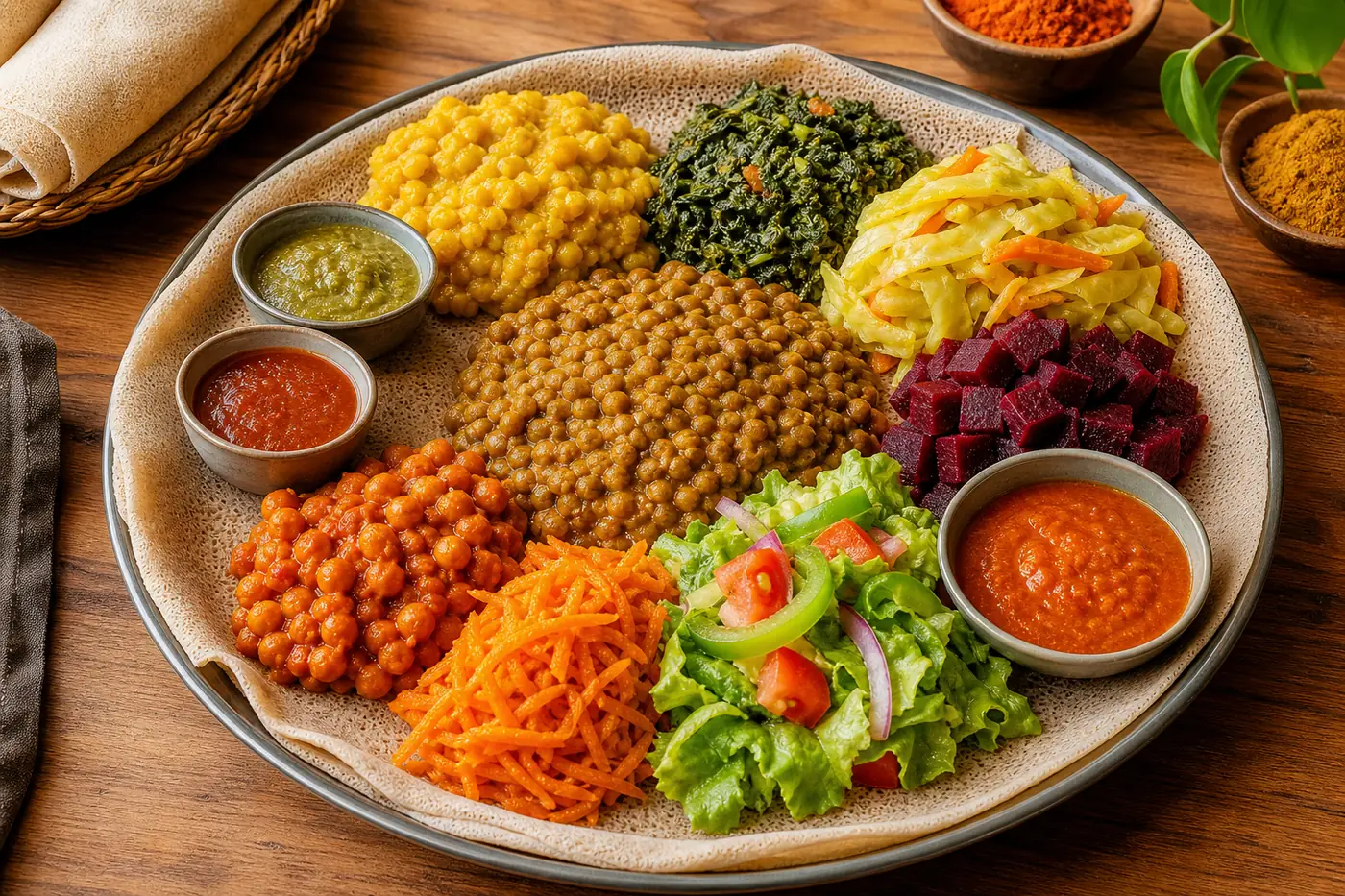
Injera is a large, spongy sourdough flatbread made from teff – an ancient Ethiopian and Eritrean grain – fermented for two to three days before being cooked on a flat griddle called a mitad. The result is a slightly tangy, beautifully textured bread with a thousand tiny bubbles on its surface, each one designed to absorb the rich stews placed on top.
Teff: a tiny grain with a long history
Teff is one of the smallest grains in the world – each seed is barely larger than a full stop – and it has been grown in the highlands of Ethiopia and Eritrea for thousands of years. It thrives where other crops struggle and gives injera its distinctive, gently earthy flavour.
How injera is made
Ground teff is mixed with water and left to ferment, usually with a little starter saved from the previous batch, much like a sourdough bread. Over two to three days the batter develops its sour tang and a lively, bubbly texture. To cook it, the batter is poured in a spiral onto the hot mitad and covered. It is cooked on one side only: as steam escapes, it leaves the honeycomb of little holes – often called the “eyes” – across the top, while the underside stays smooth.
The plate, the utensil, and the bread
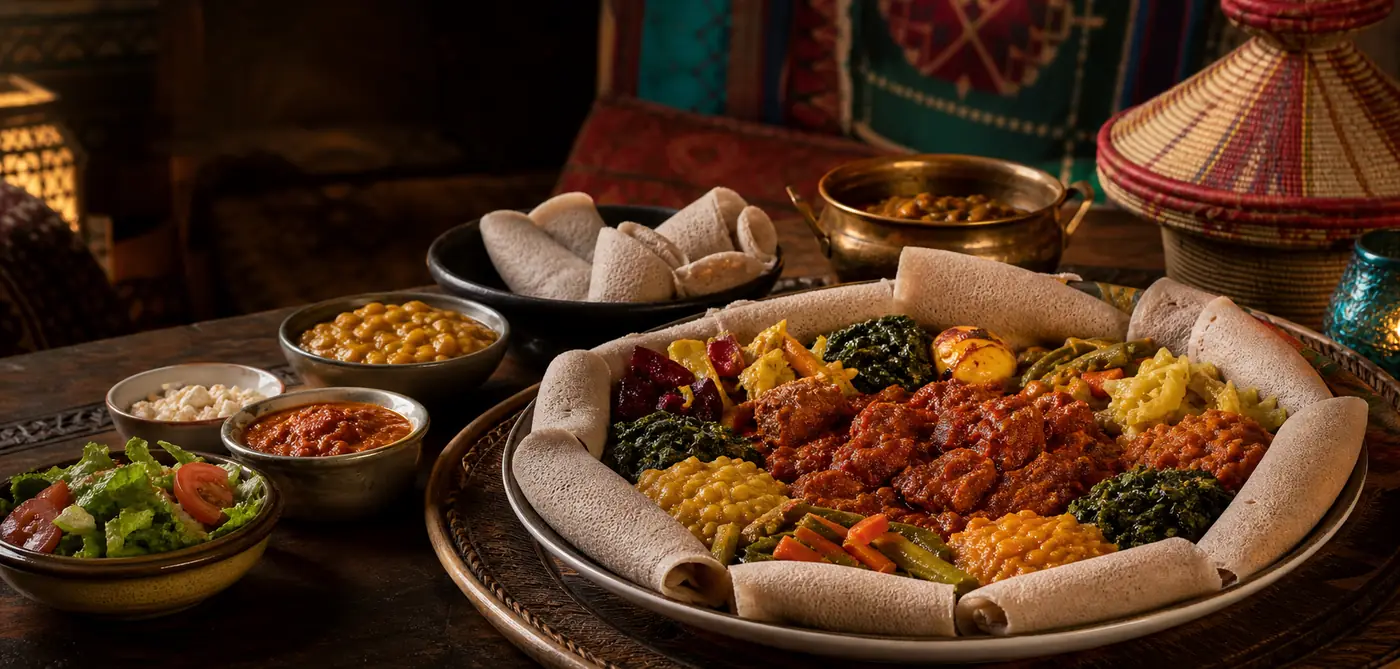
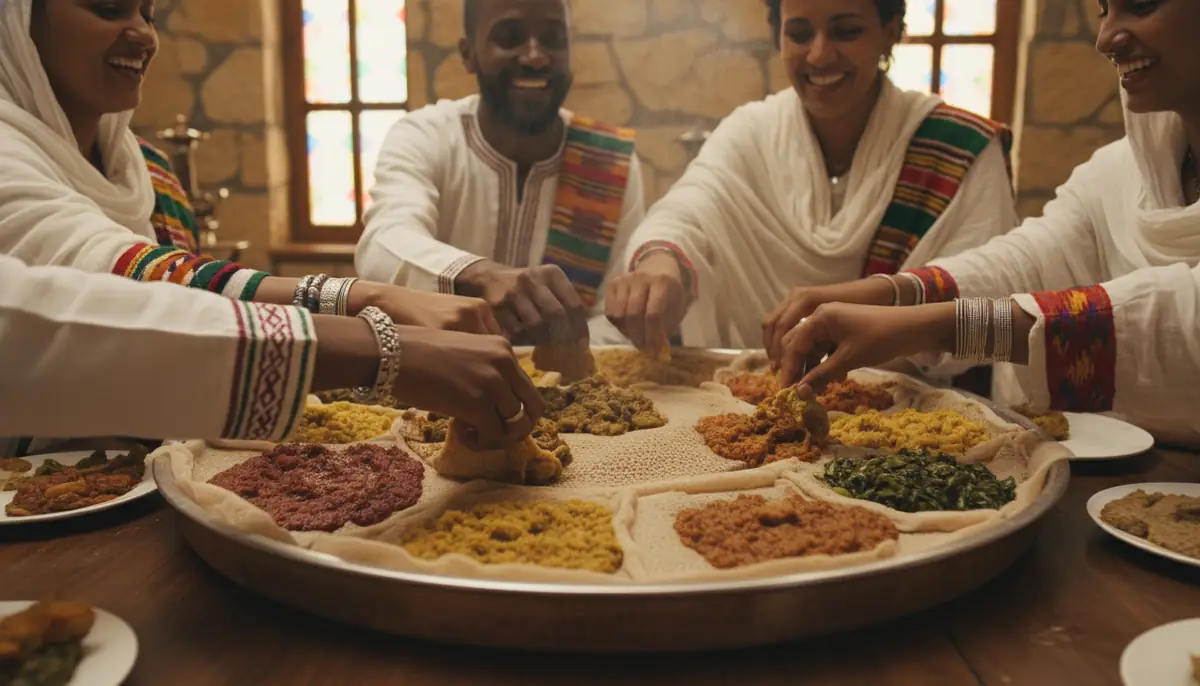
In traditional Eritrean and Ethiopian dining, injera is not served alongside your food. It is the plate. Stews, vegetables, and sauces are arranged directly on top of a large sheet of injera spread across a communal basket called a mesob.
To eat, you tear a piece of injera with your right hand, fold it around a portion of stew, and lift it to your mouth. No cutlery required. No ceremony needed – except, perhaps, the shared act of eating from the same basket as the people around you.
Tips for eating injera
- Tear off a piece about the size of your palm from the rolls on the side, or from the edge of the platter.
- Use it to pinch up a little stew rather than scooping – your fingers should stay fairly clean.
- Save the injera underneath for last: by the end of the meal it has soaked up every sauce.
- Feeding a friend a mouthful by hand, known as gursha, is a traditional sign of affection.
Dishes to try with injera
Almost everything on our menu is designed to be eaten with injera. Rich stews such as Zighni (spicy beef) and Derho (chicken) and smooth Shero (chickpea) are perfect for soaking up. Injera even appears inside some dishes: Kategna is crispy injera with spiced oil or ghee, and Awaze Tibsi Fitfit tosses shredded injera with lamb and hot pepper sauce. New to it all? Start with our beginner’s guide.
Our injera at Asmara Bella
We make our injera from a blend of teff and rice flour, naturally fermented and 100% plant-based. It is gluten-light (teff contains no wheat gluten) and pairs beautifully with our full range of meat, vegan, and vegetarian dishes. If you have an allergy or intolerance, please tell us when you book.
If you would prefer, rice is available as an alternative – but we always recommend trying the injera first.