Never tried Eritrean or Ethiopian food? Here is how a shared injera meal works, the dishes worth knowing and what to order on your first visit.
Eritrean and Ethiopian food is some of the most generous, sociable cooking in the world. Meals are shared from one large platter, eaten with your hands and built around slow-cooked stews, warming spice blends and a soft, tangy flatbread called injera. If you have never tried it, this guide explains how it all works – and what to order when you visit us on Port Street.
How an Eritrean & Ethiopian meal works
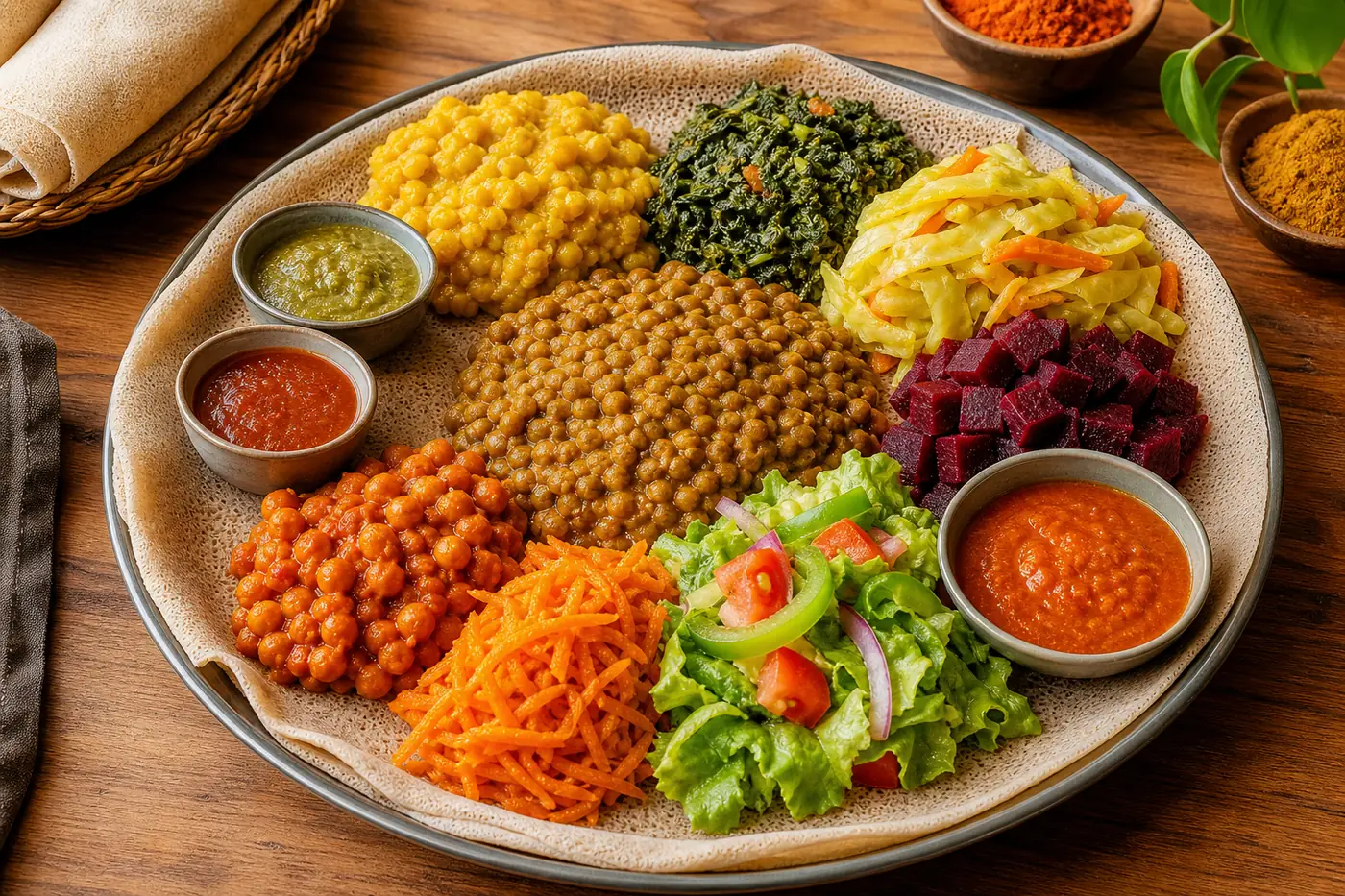
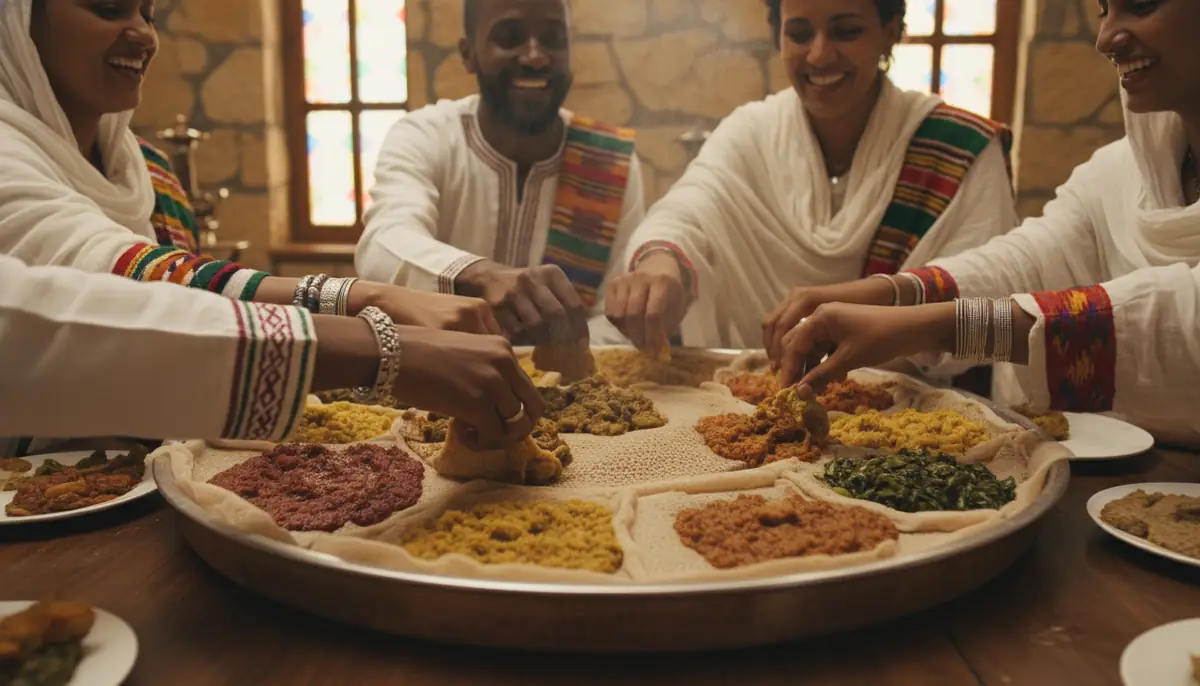
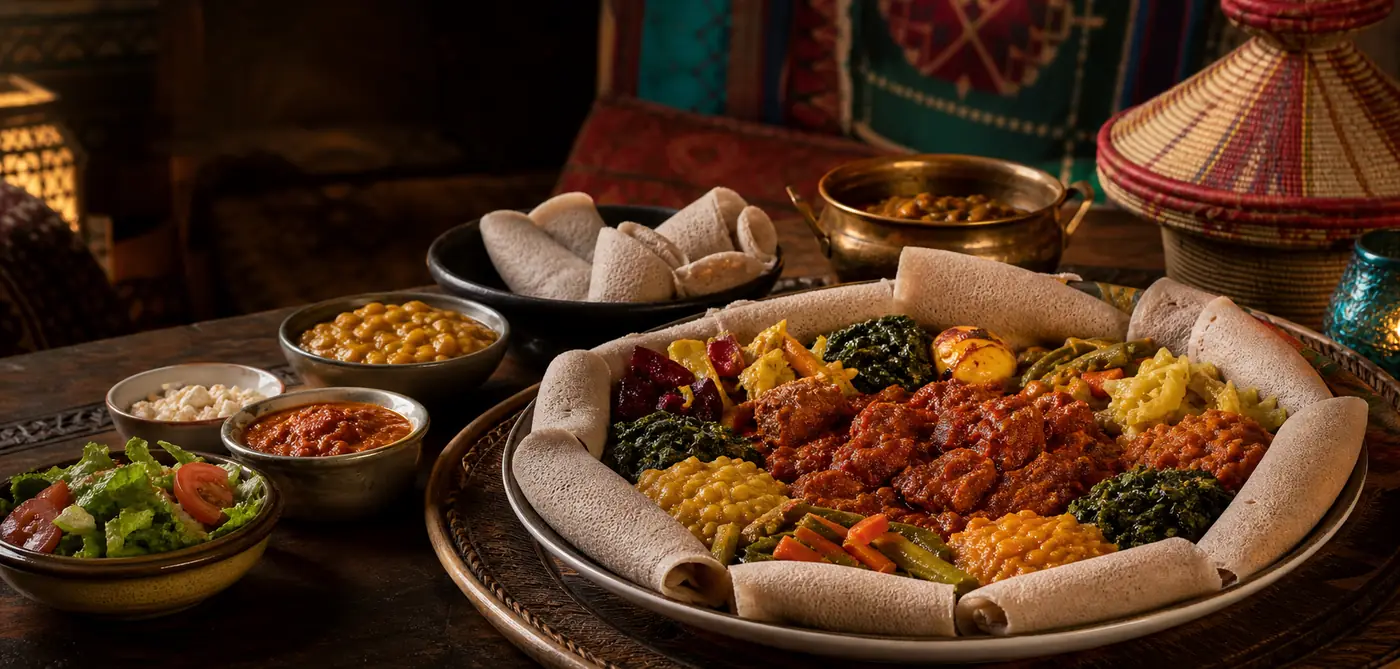
Instead of individual plates, a large round of injera is spread across a tray or a woven basket called a mesob. The dishes are spooned on top in colourful mounds, with extra rolls of injera on the side. Everyone eats from the same platter: you tear off a piece of injera with your right hand, pinch up some stew and eat. There is no cutlery to worry about, and the injera underneath soaks up the sauces as the meal goes on – many people say it is the best part.
Sharing is the point. In Eritrean and Ethiopian homes it is common to feed a friend a mouthful by hand, a gesture of affection known as gursha. You do not have to – but do not be surprised if someone at your table offers.
Start with a sambosa
Sambosa are crisp, triangular pastries, the natural way to begin. We serve Vegetarian Sambosa with spiced lentils and vegetables, Meat Sambosa with seasoned minced lamb, and Chicken Sambosa. Mixed Rolls – soft injera rolled around spiced lentils and spinach – and Kategna, crispy injera brushed with seasoned oil or ghee, are good to share while you decide on mains.
The easy way in: a sharing platter
If you are not sure what to choose, order a platter and let the kitchen decide. A Mosob is a chef-selected mixture of meat and vegan dishes for two, served together on fresh injera; the Mini Mosob is the same idea for one. For a meat feast there is the Bebeynetu Meat Platter, and for a plant-based table the Bebeynetu Special Vegan. Beyaynetu roughly means “a bit of everything”, which is exactly what arrives.
Stews (tsebhi and wat)
Slow-cooked stews are the heart of the cuisine. Many start the same way: onions cooked down slowly until sweet and dark, then built up with spices, garlic and ginger.
- Zighni – a rich, hot beef stew made with chilli and spices; one of Eritrea’s signature dishes.
- Derho – a hot chicken stew with herbs, spices, chilli and boiled eggs; a beloved Eritrean classic.
- Minchet Abish – a beef mince stew with herbs and spices, which we can make hot or mild.
Tibsi: sizzling sauteed meat
Tibsi (also written tibs) are cubes of meat fried quickly with onion, chilli and herbs – lighter and drier than a stew. Try Regular (Tsaeda) Tibsi, lamb fried in ghee with rosemary, onions and green chillies; Awaze Tibsi, lamb with a hot pepper sauce; or our Shekla Tibsi Special, which arrives sizzling in a charcoal-heated clay pan.
Kitfo
Kitfo is finely chopped, tender beef cooked in ghee with herbs and paprika. Kitfo Special adds a fresh cottage cheese and spinach on the side, which balance the richness beautifully.
The vegan dishes everyone orders
You do not need to be vegan to love the plant-based side of the menu – it is one of the great strengths of the cuisine (we explain why in our vegan guide).
- Shero – a smooth, spiced chickpea stew.
- Timtimo – spiced lentils cooked with olive oil.
- Ater – split peas cooked with turmeric and olive oil; gentle and comforting.
- Hamli – spinach cooked with olive oil, garlic and chilli.
- Alecha – a mild stew of carrots, green beans and cabbage.
How spicy is it?
Much of the warmth comes from berbere, a deep red blend of chilli and aromatic spices, and awaze, a hot pepper paste. Dishes such as Zighni, Derho and Awaze Tibsi are properly hot. If you prefer gentler flavours, look to Alecha, Ater, Hamli, Kitfo or a mild Minchet Abish – and a platter always mixes hot and mild, so there is something for everyone.
Finish with coffee
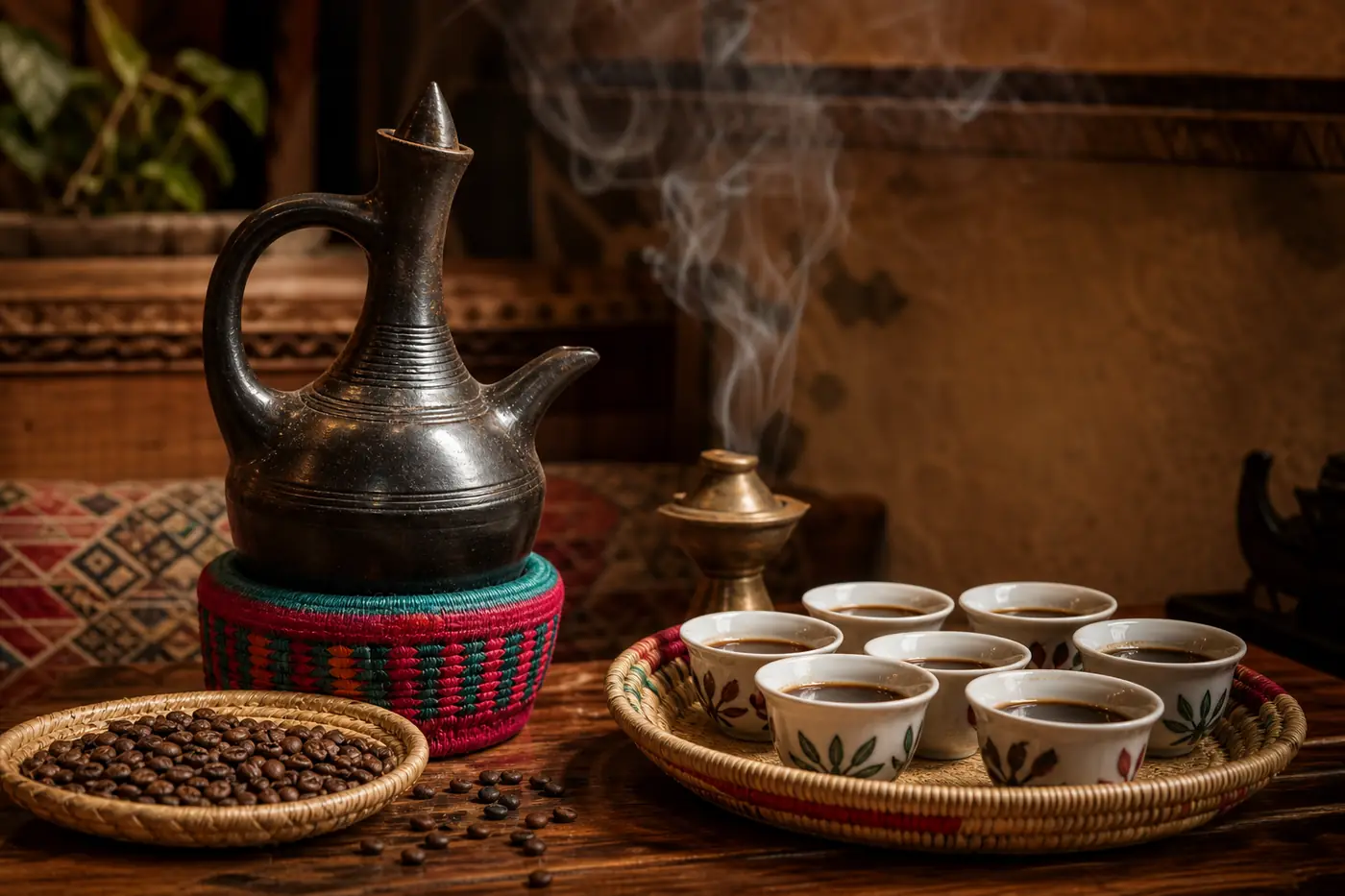
Coffee was first drunk in this part of the world, and the traditional coffee ceremony – beans roasted, ground and brewed in a clay jebena, then served over three rounds – is the perfect, unhurried end to a meal.
What to order on your first visit
- Two people: a Mosob, plus a sambosa each to start.
- A group: one platter for every two people, then add a favourite or two – Shekla Tibsi and Shero are crowd-pleasers.
- Plant-based: the Bebeynetu Special Vegan, with Vegetarian Sambosa and Mixed Rolls.
Whatever you choose, take your time. Eritrean and Ethiopian food is meant to be shared slowly, in good company. Book a table and we will look after the rest – or browse the full menu first.