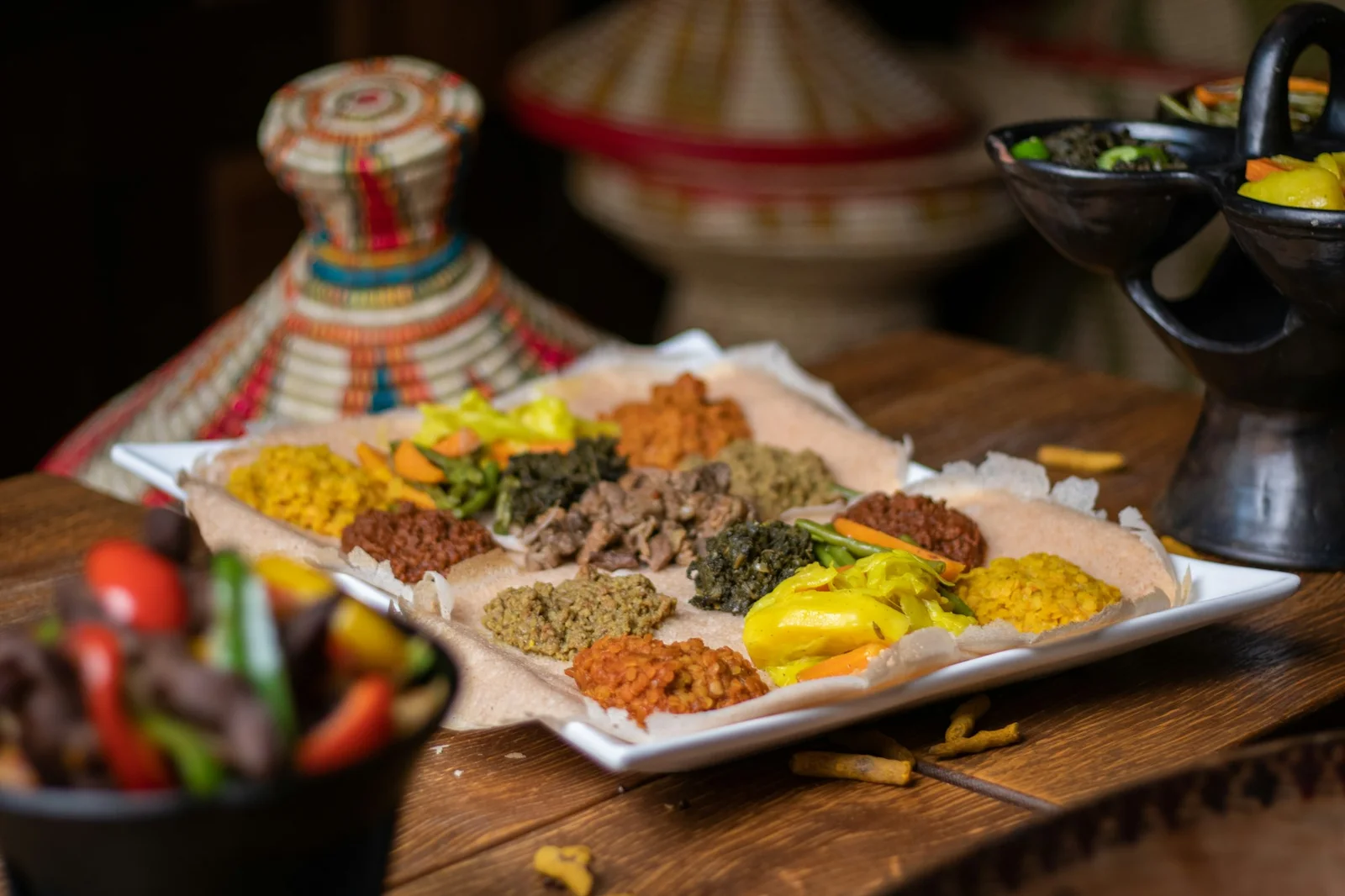
Injera is a bread, a plate and a set of table manners all at once. Learn the story behind it and you understand how Eritreans and Ethiopians eat together.
What injera is
Injera is a large, round, soft flatbread with a gently sour taste. One side is smooth. The other is covered in tiny holes, often called its “eyes”. In Eritrea it is also called taita. It is eaten every day across Eritrea and Ethiopia, at home, in cafés and at weddings, and almost every traditional dish is served on it.
What makes injera special is how it is used. It is not a side dish. A big round of injera covers the tray, the stews are spooned on top, and more rolls of injera are used to pick the food up. It is the plate and the cutlery, and it is also the best part of the meal.
Teff, the grain behind it
Traditional injera is made from teff, one of the smallest grains in the world. A single seed is about the size of a full stop. Teff has been grown in the highlands of Eritrea and Ethiopia for thousands of years. It copes with heat, drought and heavy rain better than many crops, and it gives injera its earthy, slightly nutty flavour.
Teff comes in ivory, red and brown varieties. Lighter teff makes a paler, milder injera, and darker teff makes a deeper, more rustic one. Many families and restaurants blend teff with another flour, such as barley, wheat or rice, depending on what is available and the texture they like.
How it is made
- Mix. Ground teff is mixed with water. A little batter from the last batch, called ersho, is usually stirred in to start fermentation, just like a sourdough starter.
- Ferment. The batter rests for two to three days. It turns bubbly and develops injera’s gentle tang.
- Pour. The batter is poured in a spiral onto a wide, hot griddle. In Eritrea this is called a mogogo, and in Ethiopia a mitad.
- Steam. The griddle is covered and the injera cooks on one side only. As steam escapes through the batter, it leaves the honeycomb of holes on top.
- Cool and roll. Each injera is lifted off with a woven tray, left to cool, then stacked or rolled for the table.
Making good injera takes skill. The batter has to be the right thickness, the griddle the right heat, and the pour even. In many homes it is a skill passed from parent to child.
Injera on the table
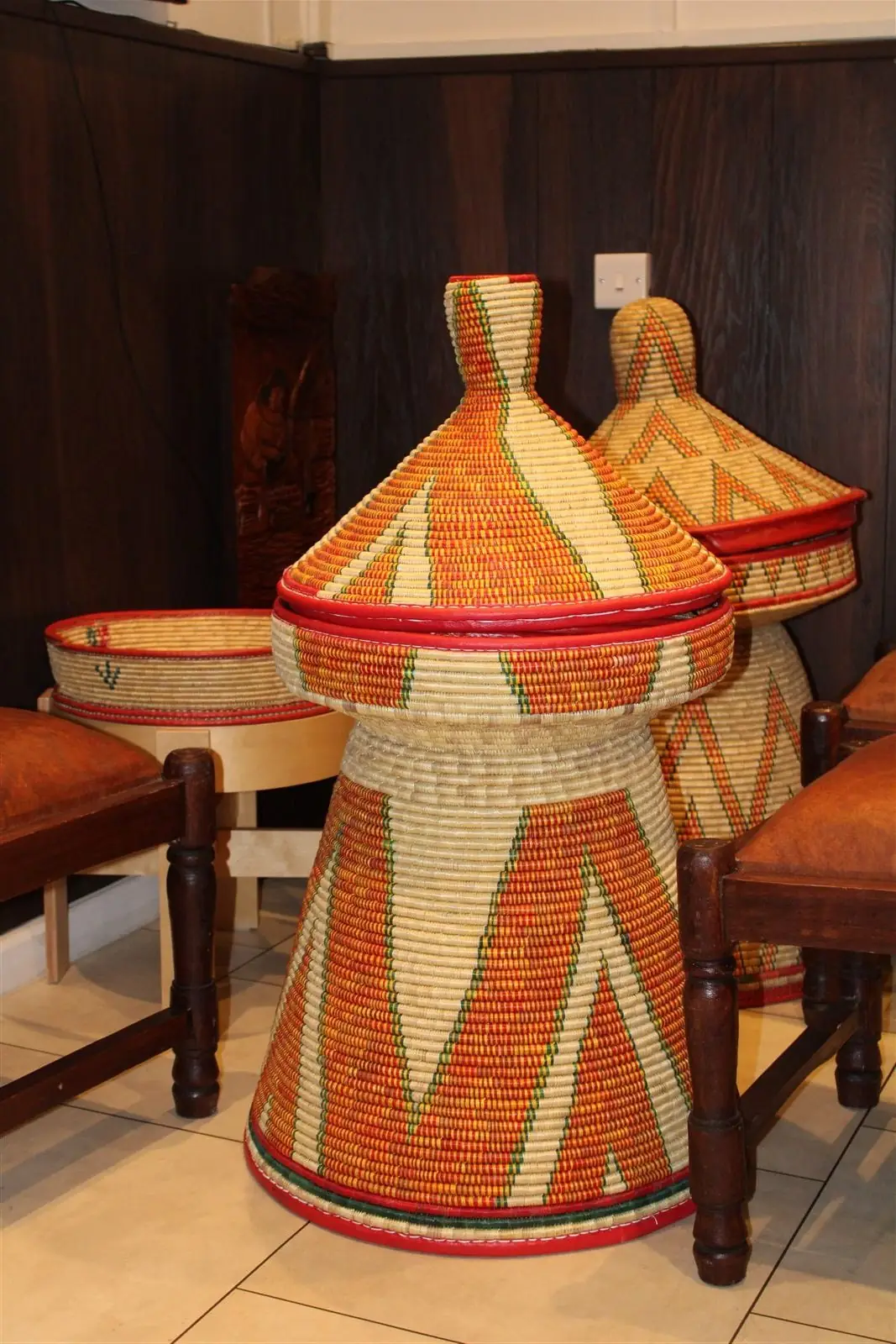
A traditional meal is served on a mesob, a tall woven basket with a lid that doubles as a small round table. Everyone sits close together on low stools around it. A big round of injera is laid over the tray, and stews such as zighni, shiro and alecha are placed on top in colourful mounds. A platter with a little of everything is called a beyaynetu.
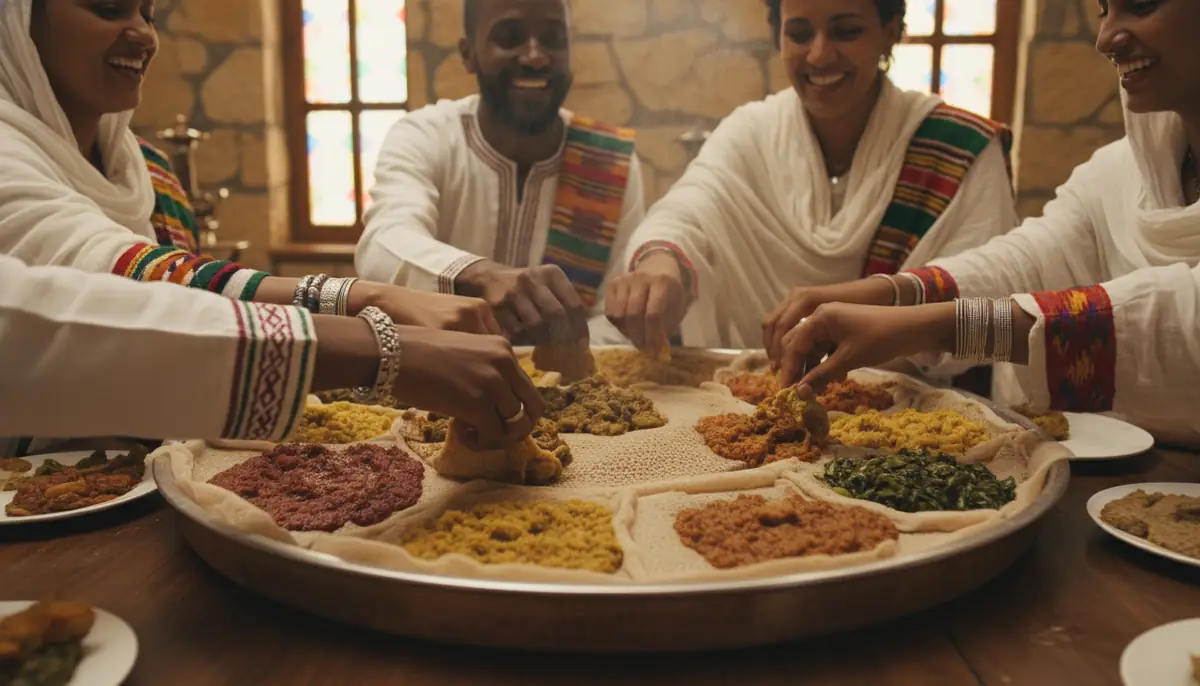
Because everyone eats from one platter, the meal is about sharing. Nobody has a plate of their own. People pass the best pieces to each other, and the meal goes at the pace of the conversation. You can try this at Asmara Bella in our traditional seating area upstairs, which you can reserve when you book a table.
How to eat with injera
- Wash your hands. You will be eating with them.
- Use your right hand. This is the custom across Eritrea and Ethiopia.
- Tear a piece about the size of your palm from a roll on the side or from the edge of the platter.
- Pinch, don’t scoop. Wrap the injera around a little stew and lift it to your mouth. Your fingers should stay fairly clean.
- Eat from the part in front of you, and work towards the middle.
- Save the injera underneath for last. By the end it has soaked up every sauce and many people say it is the best bite.
Gursha: feeding each other
Gursha means feeding someone a mouthful by hand. A host might wrap a choice piece in injera and offer it to a guest, or friends might feed each other at a celebration. It is a sign of respect and affection, and the bigger the mouthful, the warmer the gesture. If someone offers you gursha, accept it with a smile. You can return the favour too.
Our injera at Asmara Bella
We make our injera from a blend of teff and rice flour. It is naturally fermented and 100% plant-based, so it works with every dish on our menu, meat or vegan. If you have an allergy or intolerance, please tell us when you book. Rice is available instead, but we always suggest trying the injera first.
Want to know what goes on top? Read our guide to Eritrean and Ethiopian food, find out why so much of it is plant-based, or browse the full menu.
Questions
Is injera vegan?
Yes. Injera is made from fermented flour and water, with no eggs, dairy or meat. Ours is made from teff and rice flour and is 100% plant-based.
Is injera gluten-free?
Teff itself contains no gluten, but many injera recipes blend teff with other flours. Ours uses teff and rice flour. If you have coeliac disease or a gluten allergy, please speak to us when you book so we can advise you properly.
Why is injera sour?
The batter ferments for two to three days, like a sourdough. That fermentation gives injera its gentle tang and its bubbly texture.
What is injera called in Eritrea?
In Tigrinya, the main language of Eritrea, injera is often called taita. The word injera is understood everywhere.
Do I have to eat with my hands?
It is the traditional way and part of the fun, but we are always happy to bring cutlery if you would prefer.