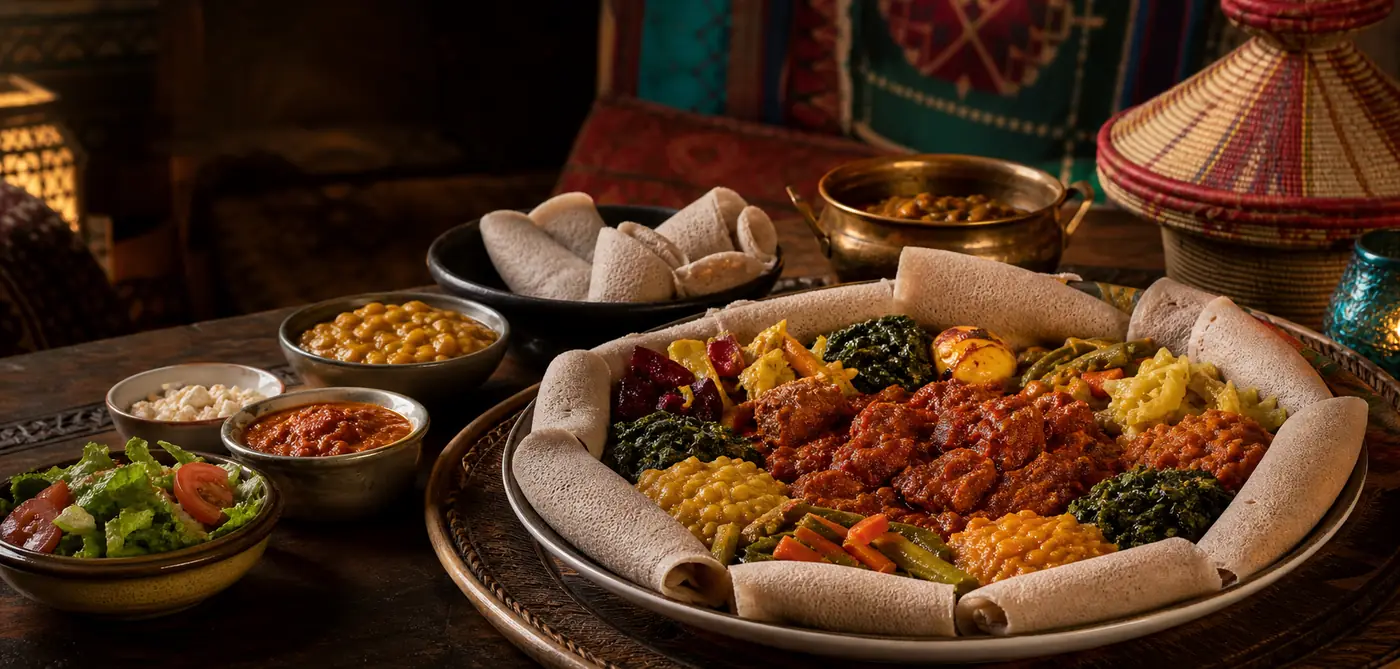
Eritrean and Ethiopian food is built around sharing: slow-cooked stews, warm spice blends and injera. Here is everything you need to know, from the spices to the dishes and the customs.
A shared table
Eritrea and Ethiopia are neighbours in the Horn of Africa, and their food has grown up side by side. Both build a meal on injera, the soft sourdough flatbread that is both plate and cutlery. Dishes are served together on one large platter, and everyone eats from it with their right hand. The meal is meant to be slow and sociable. Food is how people welcome guests, mark holidays and keep families close.
The spice cupboard
- Berbere: the signature red spice blend of chilli, fenugreek, garlic, ginger and warm spices. It gives many stews their colour and heat.
- Mitmita: a fiery, orange-red chilli powder, often served with kitfo.
- Awaze: a hot paste of berbere mixed with oil or other liquid, used as a sauce and a marinade.
- Tesmi (Eritrea) or niter kibbeh (Ethiopia): clarified butter slowly simmered with herbs and spices. It gives meat dishes a rich, fragrant finish.
- Onions: not a spice, but the base of nearly everything. They are cooked down slowly, often without oil at first, until sweet and dark.
Stews: tsebhi and wat
Stews are the heart of the cuisine. In Eritrea a stew is a tsebhi (also spelled tsebi), and in Ethiopia a wat.
- Zighni: a rich, hot beef stew with berbere. One of Eritrea’s best-known dishes.
- Derho: a hot chicken stew with herbs, spices and boiled eggs, cooked for celebrations. In Ethiopia the similar dish is doro wat.
- Minchet abish: finely minced beef cooked with herbs and spices, mild or hot.
- Alecha: any mild stew made without berbere, often golden with turmeric.
Tibsi, kitfo and grilled meats
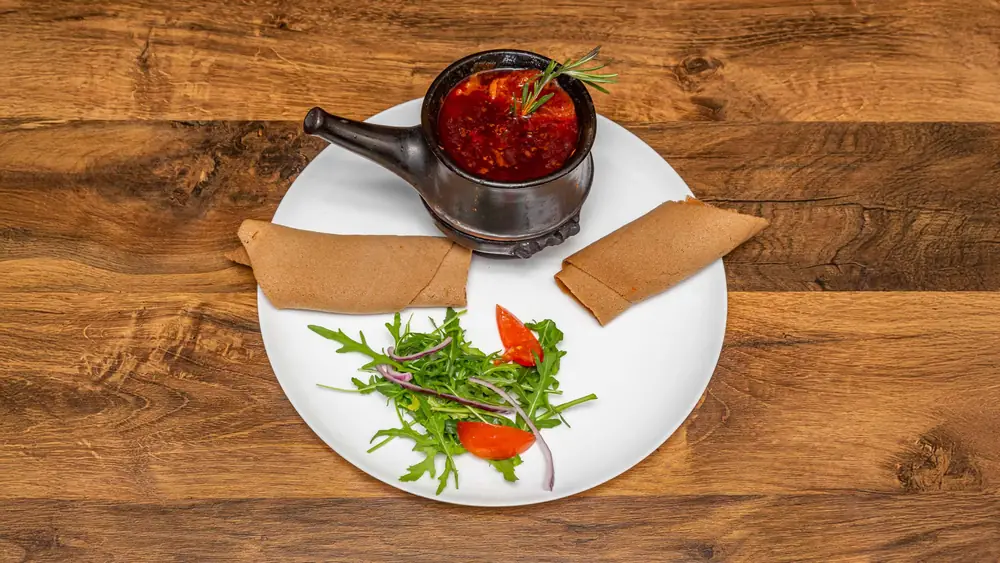
Tibsi (or tibs) are pieces of meat fried quickly with onion, chilli and rosemary. They are lighter and drier than a stew. Our Shekla Tibsi Special arrives sizzling in a charcoal-heated clay pan. Kitfo is finely chopped beef warmed in spiced butter with mitmita. It comes from the Gurage people of Ethiopia and is often served with a fresh cheese and spinach.
The plant-based table
Few cuisines in the world have as many naturally vegan dishes. That comes from the Orthodox Tewahedo churches of Eritrea and Ethiopia, whose followers keep more than 180 fasting days a year without meat, dairy or eggs. We explain the full story in why plant-based food is so big in Eritrea.
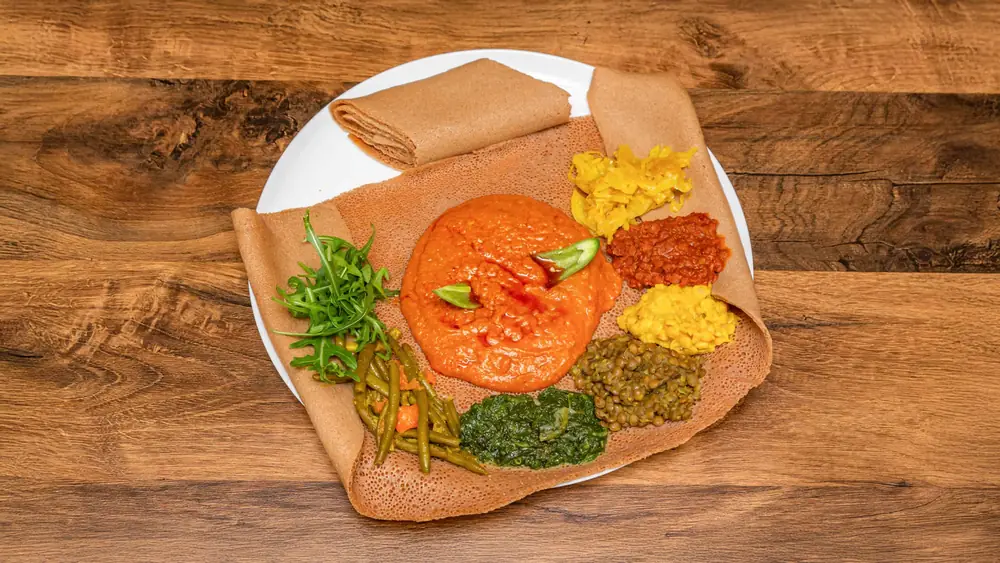
- Shiro: a smooth stew of ground, spiced chickpeas. It is Eritrea’s everyday comfort food.
- Timtimo: red lentils cooked with oil, garlic and berbere.
- Ater: yellow split peas with turmeric, mild and comforting.
- Hamli: spinach or greens with garlic and chilli.
See them all on our plant-based menu.
Eritrean or Ethiopian?
The two cuisines share injera, berbere, the coffee ceremony and the fasting tradition, and many dishes overlap. The differences are mostly in names, regional dishes and outside influences.
- Language. Dish names are usually in Tigrinya in Eritrea (zighni, tsebhi, taita) and in Amharic in Ethiopia (key wat, wat, injera).
- Italian influence. Eritrea was an Italian colony from 1890 to 1941. Pasta, frittata and espresso drinks such as the macchiato are part of everyday life in Asmara.
- The coast. Eritrea has a long Red Sea coastline, and port towns such as Massawa are known for fish.
- Regional dishes. Ethiopia’s size brings dishes such as kitfo from the Gurage region, while Eritrean cooks are known for their shiro and zighni.
Read more in Eritrean vs Ethiopian food: what is the difference?
Coffee and ceremony
Coffee was first drunk in this part of the world, and serving it is a ritual. In the coffee ceremony, green beans are roasted over coals, ground by hand and brewed in a clay pot called a jebena. It is served in three rounds, awel, kalaay and bereka, often with popcorn and incense. In Asmara, the ceremony sits alongside a lively café culture. Read about the city in our Asmara city guide.
What to order at Asmara Bella
- First time? Share a Mosob, our chef-selected mix of meat and vegan dishes on one injera.
- Plant-based? The Bebeynetu Special Vegan, with Vegetarian Sambosa and Mixed Rolls to start.
- Like it hot? Zighni, Derho or Awaze Tibsi.
- Prefer mild? Alecha, Ater, Hamli or a mild Minchet Abish.
- Want the full experience? Reserve our traditional seating upstairs and finish with the coffee ceremony.
New to it all? Our shorter beginner’s guide walks you through your first visit.
Questions
Is Eritrean and Ethiopian food spicy?
Some dishes are properly hot, especially those made with berbere, awaze or mitmita, such as zighni and awaze tibsi. Many others are mild, such as alecha, ater and hamli. A mixed platter always has both.
Is Eritrean food the same as Ethiopian food?
They are closely related and share injera, berbere and the coffee ceremony. The differences are in dish names, regional specialities and influences, such as Italian food in Eritrea.
Is it good for vegans?
Very. Because of the Orthodox fasting tradition, there are many dishes made entirely without animal products, and our injera is plant-based too.
How do you eat Eritrean and Ethiopian food?
With your right hand, using pieces of injera to pick up the stews from a shared platter. Cutlery is always available if you prefer.
What should I order first?
A sharing platter such as a Mosob or a vegan beyaynetu is the easiest way to try a little of everything.